Monday, January 12, 2009

Right around the corner...


It is dangerous to have a restaurant close to one's home.  We have several.  As Karina and I have talked about cutting out of Brooklyn, we often run into some troubled moments.  She inevitably mentions the restaurants we won't be able to go to anymore, and how she likes to be able to do that!  I tell her we will likely go out less and less as we (grow up) get married, have kids, etc.  

I think it will be ok, we will move up into the mountains of northern New England, have some kids, do some (very) small scale farming, and be very, very happy.  But Buttermilk Channel isn't going to make that transition any easier.

On the corner of our block, around september, construction began on the storefront vacated by Cafe Scaramouche in mid '07.  On several occasions the grinding of the jackhammer at 8AM was a foil to my attempts at sleep.  We lost parking spots and gained new sidewalk; all the while with growing anticipation.  Anytime a store opens curiosity and excitement are stoked.  

The boards came down and windows went up, allowing us covetous glances inside at the high bar and tables that began to appear.  Finally we began seeing those who would be the purveyors of the restaurant.  Watching a tasting as we walked home one night Karina and I said to each other, for the first time of many, "this is going to be dangerous".  They were young, and the decor was simple and homey.  Everything about it screamed New American and Slow Food

Finally on Tuesday the 25th of November, Buttermilk Channel opened up.  We were expecting to go the following night, but could not resist a change of plans and walked in around 7.  The staff was friendly, but not overbearing, and we took our seats at the large community style table in the middle of the floor.  

The place seats somewhere around 50, with about 6 or 7 seats at the Bar, 10-12 at the big table and another 40 or so at 2 tops (which can be combined into 4 and 6 and whatever...).  

After looking at the Menus we knew our doom was sealed.  They had Mozzarella and peppers from Caputo's and Esposito's, the two very fine italian deli's in the neighborhood; they had a Lamb special for tuesday nights, with lamb from Jamison Farm a nice certified humane outfit in western PA; they had some terrific east coast Oysters, which made me very happy; and for Karina, a full Vegetarian Menu.  Chef Ryan Angulo has done a terrific job of putting together a menu that is cohesive, but can also serve varying palettes (and ethical deviants like myself and Karina).  It is also almost fully stocked with seasonal and local (northeast, at least) foods.

I ordered some oysters and the lamb, and Karina ordered Johnny Cakes off the veggie menu.  They also brought out some delicious sweet and savory popovers as a starter.  The food was really good, not too complicated, but with interesting combinations.  The anchovy olive butter served with lamb and cauliflower made for a spry and tasty dish; and Karina's mini pancakes came with some delicious mushrooms and garlic, and (very) fresh slaw.  

We finished off the meal with some terrific Oatmeal Cookies.  

Since that visit we have been back several times.  We have made a bit of a ritual of going there on thursday nights after the Office, for fries, wine, and the absolutely outrageous Apple Cider Donuts.  Service is excellent.  The owner and manager Doug Crowell is devoted and obviously knows the ins and outs of the business.  Additionally he is supportive of his waitstaff, a quality few managers possess.   

Last night I finally tried the namesake dish, the Buttermilk Fried Chicken.  It was fantastic.  The winter vegetable slaw is really terrific, and for a twist, the dish comes with warm waffles and a maple syrup concoction (hey Ryan, what's in that shit??).  All together the dish is the most comforting of comfort foods.  Who doesn't love chicken and waffles? 
Karina had the Kale and Endive salad, which comes with a lovely (on the hard end of) soft boiled egg split in half sitting atop the salad luxuriously.  It was also delicious, her favorite dish so far (i think).  

In all our visits so far, the place has been generally crowded, and the service has been, without exception, very smooth and very clean.  The servers are warm and helpful, but not annoying and overly friendly.  They don't bother you with extended conversation and up-selling techniques.  They largely allow you to do what you came there to do, enjoy the food.  

I don't know how we are going to get married with this place so close.  We have to figure a way to limit our visits to a reasonable once/month, or something.  Otherwise there just won't be any money left.

Eat dangerous.

Tuesday, January 6, 2009

Tuesday is recycling day

This is really where the quest for local wedding food started, on a small farm in New Hampshire.  

I also wanted to remind folks about the problems of Concentrated Animal Feeding Operations.  (CAFO's) and this post talks a bit about it.
So enjoy, though it is a repeat.

from 4/22/08

Monday, December 22, 2008

Farming a Wedding, Part 3: interested parties, ins and outs, what have you's

In the last 50 years the food system, like most other industries, has leaped, bounded and thrusted itself into the future.  Fertilizers, insecticides, mega-farming and genetic modification have created a miasma both literally, in the fields and waterways of our country, but also figuratively, in the minds of people worldwide.  


Many have simply forgotten where their food comes from, and how it came to be.  We have forgotten that asparagus shoots up in the spring, strait up, one at a time;  that cows have been grazing on grass and nothing else for thousands of years;  that strawberries taste better in the summer because that is when they are in season.  These simple facts, known to human history for generations beyond memory, are being lost with breathtaking efficiency.

And it is dangerous.  In a 2006 E. Coli outbreak in Dole's bagged Spinach,  104 cases of infection occurred in no fewer then 26 states, and one case in Canada.  Dole, "The world's largest producer and marketer of fresh fruit and vegetables" (according to their website) sells fruits and vegetables in 90 countries worldwide.  It draws from uncountable fields across the globe, spending unheard of amounts of money and natural resources to bring mediocre quality fruits to the American table.  Dole has no reason to determine the sources of its product, if they did perhaps the FDA investigators may have had better luck.  ("they were unable to determine how the contamination originated")

Dole's product, and much of the product distributed to places like Mohonk Mountain House, is very difficult to source.  The food is grown in one place, sent to a sorting factory, mixed with other food of other farms, sent to a packing plant, which may service several brands (this happens very commonly with beef), where it is mixed again, then sent to a distributor to be delivered to stores across the country.  There is no system in place to determine origin.  A section of tomatoes in your local supermarket may contain fruit from the same country, but determining which farm, town, county, or state it came from is literally impossible.  

On the other hand, if a small local farm has an outbreak, the damage is limited to the locale for which it serves, and the ability of regulators to determine the scope and necessary response to the problem is comparatively simple.  The problem can be dealt with efficiently, and the farmer will likely lose her entire operation to lawsuits.  Dole on the other hand, with $6 Billion in annual profits, can afford to pay off hundreds of settlements out of court, not even cracking the ivory tower at the top.

There is simply no comparison in terms of safety.  Small farmers must produce safe and high quality food to stay afloat.  Mega-foods have little or no concern with these pedestrian issues, profit margin is the only concern, as one can plainly see

E. Coli, a relatively rare bacterial infestation, is not the only reason to look to local farms.  Whole unprocessed farm foods have much higher nutrient contents, much lower rates of dangerous bacterium, dramatically different (and healthier) fatty acid ratios, and no refined grain or sugar.  This is a modern recipe for health and longevity.

This is only one reason we have chosen to source our wedding from local farms.  It is one of the most complex and difficult to grasp, as we simply don't understand how the system works, and how it can damage our lives, all in the name of higher profits.  Small farms are about livelihood, family, community, virtues that are often discussed in the upper echelons of american politics, but little concern is actually paid to them.  

We have seen these communities at work, and they are more then just a discussion around a liberal dinner table.  They are the last best hope for our food, our health, and our society.


Saturday, December 20, 2008

Yet another confusing diet plan, but it's so pretty!


It actually doesn't look all that bad.  Although it suggests way too much water, a fine way to tax the kidneys in the long term.  But I like the attempt at dethroning the miserable food pyramid. Sadly the diet seems to be a ruse to get rich folks in Boca to go through an expensive diagnostics regimen with the joyful inventor of the the diet scheme, Dr. Robert D. Willix Jr..

My suggestions?  A bit more complicated, but some ballpark information can be found here, here, and here.

Friday, December 19, 2008

Farming a Wedding, Part 2: Brook Farm


We drove down the long road adjacent to rolling pasture and a rickety looking fence on a cold saturday morning just before thanksgiving.  The Brook Farm Project is a farm which sits directly under the imposing and vast cliffs of the Mohonk Preserve in New Paltz, NY.  We decided to visit the farm with the hopes that they might be able to supply some of the food for our wedding.  The farm actually sits on the Mohonk property, and is used by lease.  Using their food would epitomize the local food movement we are trying to support and sustain.

But as noon approached it was difficult to think of anything but the bone chilling cold that had descended on the Hudson Valley the night before.  
The farm runs primarily as a CSA.  As we walked over from our car, we saw folks picking up a reasonable share of the available (and dirty!) produce from large baskets.  To know what a "reasonable" amount was, a large billboard stated how much of which produce was kosher to add to each member's "share".

We saw Dan immediately, wearing a Dickie's bodysuit that looked as if it were made for a Giant, some beat up work gloves and a furry earlap.  I was jealous, freezing in my ripped bluejeans and felted jacket.  Dan is a very tall man with a deep voice and a warm and engaging disposition.  He chatted easily with his members, showing real and honest fondness for each.  We got his attention and began talking with him about our ideas for the wedding.  As he listened to our plan his eyes glowed with excitement, he immediately jumped on board, the season is perfect (late september), the chefs will be elated, Mohonk needs something like this, so they can really get it.  

Dan is a true believer.  As we talked with him we learned just how powerful community can be.  His CSA is not just a food supply service.  Each member must work a commensurate amount to their share value (full share, half share, student share, see the CSA .pdf), engaging the member in the production, as well as the consumption of their produce, meats and eggs.  The ties members have run very deep, forming a community like those of simpler times, yet fully integrated into the modern world.  This is not an anachronism, it is an efficient, economical and virtuous system that works as well now as at any other time in history.  

Listening to Dan talk about farming and the movement for local and organic (or uncertified, but of higher standard, as Brook Farm is) food is infectious.  We left Brook farm still shivering, but with the assurance that they could provide all of the produce necessary for the wedding reception.  

In return, Dan asked Karina and I to come back in the Spring and work on the farm.  A task we are only happy to accomplish.  

The only trick now?  Make sure Mohonk buys produce only from Brook Farm.  This will likely turn out to be the hardest part: getting Mohonk to do what we want.

We'll see.   But at the moment I am still infected by Dan's optimism and belief in the spirit of his community, so I will hold to that for a little longer!

Rock.

Thursday, December 18, 2008

Farming a Wedding Part 1


So many changes.   But I love change, so all is well.   Karina and I are getting married next year.   I always thought planning a wedding would be fun, I didn't know it would be this fucking fun!

I have been working on the food.   We are getting married at the Mohonk Mountain House, a colossal frankenstein of a hotel that sits in what must have been an edenic hideaway for the Mohicans 400 years ago.   The house abuts a long lake, surrounded by rocky cliffs. The cliffs themselves are a maze of tunnels, caves, rockfalls, and dwarf pitch pines that have clung to these cliffs far longer then human memory.


But it is the food that is the most important aspect of our wedding.  Mohonk works through a set of distributors, standard practice for a food operation so large.  There are hundreds of guests each day that need to eat, and the menu has to stay fairly steady.  They have made some steps in sourcing locally, but an operation so large cannot be supported by small farms, unless some unifying force brings all the farms together.

That force is us.  We have a unique event of just over 100 guests.  They have to prepare and deliver our food independent of the main kitchen.  We have a unique opportunity to drive the Mohonk staff directly into the local farms of the region.  

Luckily those farms are close by and they are amazing.  So I will be posting about each one over the next few weeks.  

The Farms:

Friday, November 7, 2008

an education

The food system, in 9 pages of Michael Pollan clarity:
Open letter the the next president of the USA


What's next?


President-elect Barack Obama.


"I was just reading an article in the New York Times by Michael Pollen about food and the fact that our entire agricultural system is built on cheap oil. As a consequence, our agriculture sector actually is contributing more greenhouse gases than our transportation sector. And in the mean time, it's creating monocultures that are vulnerable to national security threats, are now vulnerable to sky-high food prices or crashes in food prices, huge swings in commodity prices, and are partly responsible for the explosion in our healthcare costs because they're contributing to type 2 diabetes, stroke and heart disease, obesity, all the things that are driving our huge explosion in healthcare costs."  
- Barack Obama


Friday, October 31, 2008

Sourcing your food

Think it is important to know the sources of your food?   From the NY Times:

Yet another local guide

Local Fork is a guide to all things local.

click here for the NYC guide.

Wednesday, October 29, 2008

My on-going love-hate affair with Oprah.


First she and I are together on Faulkner, then Obama, then she does her Vegan Cleanse and I flip out on her, telling her I just can't do it anymore, that she is just too fucking dumb for me.

But Oprah is a clever one, always surprising us when we think of her as the Queen Mum of sycophantic housewives.  

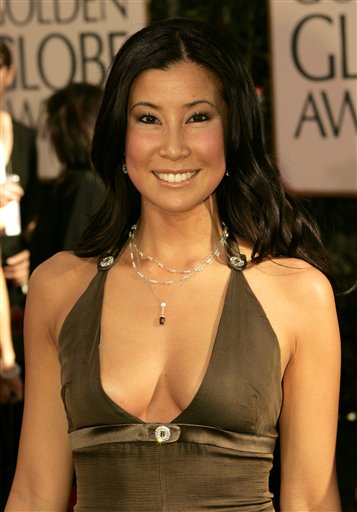
She has come back to food, after unceremoniously getting sued by the meat industry for cutting out burgers after the mad cow scare, with a basic Green eating guide and a new lengthy piece on ethics and industrial animal production by The View's token asian co-host, the adorable reporter Lisa Ling.  It is a lengthy piece, and has some actual reporting in it.  

For some serious information on why CAFO (concentrated animal feeding operations) are the evil empire of food production in America, read this report from the Union of Concerned Scientists.

What a brooklyn gal can do


Meet KayCee and Owen formerly of brooklyn, now running an organic and pasture based farm called Awesome Farm! in Tivoli, NY.


They do eggs. chickens, lamb and turkey, all pastured, and they make Tempeh too!  For you veggie types.

It is about 2 1/2 hours north of New York City, alongside the Hudson and the Catskills further to the west.  Put it on the day trip list and pay them a visit!

be well.

Friday, October 24, 2008

Pasture Meat.


I have written about this before, but it bears repeating, as many still cannot grasp the problem with American Meats.


The History
Until the last half of the 20th Century, our meats, including Beef, Chicken, Pork and lamb, as the four major meats came from animals raised in traditional Euro-Asian ways.  The cows were raised on grasslands, the chickens foraging in those grasslands, and pigs foraging everywhere they could.  In the 17th century in New England, for instance, farmers would turn their pigs out into the woods until fall, when they would go out and round them up, a difficult process for sure, but not as difficult as managing the pigs for the entire spring and summer seasons.  This turned out healthy strong pigs for slaughter.
In the latter 20th Century, after Nixon instituted massive grain subsidies, two things happened.  Farmers began using their pasture land to grow Corn, Soy and Wheat, and a surplus of grain resulted.
The need to use that grain was a necessity or the market would crumble.  So we began feeding the animals with it.  The resultant industry driven animal factories are well documented in previous posts on this blog.

What this means for your health
The meats that are now grain fed are qaulitatively different then the old pasture animals.  They have a much higher ratio of Omega 6 fatty acids to Omega 3 fatty acids.  Human beings need a nice 3:1 ratio.  Pasture animals have a near perfect ratio for our consumption.  Pasture animals, particularly cows, produce milk with much lower bacterial counts then grain fed animals, and pasture animals have much higher levels of essential vitamins and minerals then grain fed animals.  In short they are a far healthier product.
This is not a little thing, our metabolism has developed over thousands of years to function off of specific foods.  It is glacially slow in adjusting to new factors, hence lactose intolerance for 70% of the world's population.  Pasture meats are the perfect food, having all essential amino acids, vitamins and minerals (except vitamin C), along with a perfect inflammation reducing ratio of Omega 3 and 6 fatty acids.  But grain fed animals quickly take on the opposite composition, lacking in vitamin and minerals, and with greatly expanded Omega 6, we are left with less nutrition and higher inflammation.  

Where to get the meats

1.  Farmer's Markets, find your local market or farm here

2.  Delivery, I have recently found two sources.  Fleisher's Gras fed will deliver grass fed meat to your door if you live in NYC or Rhinebeck. They have beef, pork, lamb, and poultry.  
8-O'clock Ranch is an upper NY state ranch that delivers orders as small as 5-6 lbs and as large as halves and wholes (sides of beef!).  I have joined their CSA which gives me 3 months of Beef, Lamb and Pork, from December through February, 10 lbs/month.
The best part - their prime rib cuts are all dry aged, a process that is sadly less and less prevalent, as it delivers meat of the utmost tenderness and flavor.

{Edit: I just found another resource from our friends at the Union of Concerned Scientists.  A paper entitled Greener Pastures: How grass-fed Beef and Milk contribute to healthy eating

Hiatus

I have not had much time for this, as school and work and other concerns have, like Putin, reared their heads.  I have been visiting some farmer's markets here in the city, and so it may be time to get going again.


thanks for reading.

Tuesday, September 30, 2008

Americans demand knowledge of the origins of their food


Here it is.  We have removed ourselves so completely, so decisively from our food's origins that the Federal Government has now stepped in to set things strait.  Of course when approaching problems such as these, the grand gestures of bureaucracy more often then not have the greatest effect upon the least vital elements.  


So what has happened?  According to the fed, food must now be labeled clearly to display its Country of Origin.  This may be via sticker, twist tie, whatever, paint em up if you want, but a $1000 fine will be (sparsely, carelessly) enforced on those that do not label their foods.

This will cause a stir in the food industry, as fruits, vegetables, and meats will need to be segregated for labeling and shipping in situations where they might formerly have ridden together, so to speak.  The reasons for this newfound desire of the Fed to follow your food around like a hawk lie in the recent outbreaks of e. coli, and such among american produce.  

I just don't have the energy for this one.  I know exactly where my food comes from.  If there is a problem I can drag the farmer who sold me the bad product out of his/her tent and onto the long meadow of Prospect Park, beat them senseless, steal their truck, and generally lay waste to the life of myself and any others that get in my way.

If Captain Pathmark, or Jimmy Charger for that matter, has a problem with their food, who are they going to go to for answers?  Even if the little sticker says "Made in Uraguay"  or "proudly grown in the republic of my shitty mc'shit-alot" what then?  Do they drive to the country in question, asking passersby where the farm with the bad tomatoes is?  A "country of origin" label gets you pretty close to the problem if your food comes in from lichtenstein, or Trinidad and Tobago, but what if your food came from Argentina, Brazil, The USA, Canada, China?  How do you find out who fucked the peppers over if your searchable radius is 3000 miles?

There is just no way to legislate integrity.  

Our protections from the perpetration of this wildly overgrown culture of consumption do not lie in the federal fucking government.  Our saving grace is to renew our connections with those that grow and cultivate and process our foods.  I know the farmer who sells me my bacon, my lamb, my steak, my apples, pears, mustard greens, mushrooms, milk, pasta, cheese, bread, and grains.  I know where every vendor lives, because their addresses are written on the signs above their tents.  Or building, in the case of my pasta, which comes from Caputo's on Court st, run by 3 generations of a local family.  Where are these people going to go if they poison my food?  Where can they hide when I drag my sick body and my lawyer into their establishments and hold up the paperwork with "CRIMINAL NEGLIGANCE" written all over it.  Are they going to point sheepishly at a 2 million square mile swath of the republic of god knows where and say "it was THEM"?

The system is juked to protect producers that fuck with your food.  Protect yourself, get back to the real free market economy, in which we police ourselves, and our farmer's produce quality food not because someone tells them to, but because they depend on our business with their very livelihood.  

Eat small.

Friday, September 26, 2008

Choices made easier

Eat Well Guide has put out regional food guides for several metropolitan areas. Check out the New York City Guide.

october.

between the mets, the absurdity of politics, and moving into a new apartment, it has been difficult to think about writing.  but i have returned.  so fear not, new information is on its way.


Although, October baseball and November elections are almost upon us...

Thursday, September 11, 2008

San Francisco goes local


Gavin Newsom is at it again.  First he fought the good fight for marriage equity.  Now he is trying to convert all city meals to local sourcing.  Read all about it here.

Wednesday, September 10, 2008

The rabbit hole: Omega Fatty Acids

I was just talking to a friend who has some troubles with inflammation.  I have been studying metabolism this term, and have finally figured out what exactly these Omega Fatty Acids are all about:

Omega 3's and 6's are the fundemental fats in the production of arachidonic acid.  The concise story on this is that arachadonic acid's actions (via it's offspring) are in regulating inflammation.  

So if inflammation is a major problem, it is likely that your fatty acid balance is off. It is possible that your ratio of 6's to 3's is as much as 3 or 4 times too high. The ratio should be about 3:1 (O6:O3), but the average american has a ratio of about 15:1. This translates to much higher inflammation rates throughout the body.  

Overview:
low ratio - low inflammation, strong bowel mucosa
high ratio - high inflammation, a host of other problems in the long run, such as atherosclerosis, etc.

Here's the problem:  trying to get back to a healthy ratio basically requires traveling back in time to before industrial farming destroyed the fat chemistry of our foods.  You can get good foods, but you must be vigilant.  

If you are a strait veggie, invest in some flax seed oil (in the dark thick bottles) and have a teaspoon with dinner, or use it in dressing and the like.  This should be kept back in the cupboard, as flax seed oil is touchy when exposed to light.

if you eat eggs, milk and meat, you must only eat from pastured animals (i.e. grass-fed beef/milk cows, and pasture chickens).  When animals are fed grain their fatty acid ratio goes out of whack.  Pasture raised, grass finished beef is the best, as it has a nearly perfect ratio, and it has a lot of great healthy fat.

a lot of people recommend good fish oil also, but this should probably not be consumed in high quantities.  Or just eat some good fish.  

From what I have read, problems with inflammation can be reigned in tremendously by simply altering the O6:O3 ratio.  

So, if you have allergies, constant inflammatory conditions, atherosclerosis, etc etc, you may find some benefit to altering the diet to bring the Fatty Acids under control.  

Where to shop:  Farmer's markets.  The eggs, meats and milk are mostly from pastured animals.  Look here for farms near your area.

Thursday, September 4, 2008

Eat your fats

I was looking for studies on fiber and I stumbled on this one from JAMA.  The framers of the study looked at 147 studies of diet and Coronary Heart Disease in order to come up with a picture of a healthy diet in terms of CHD.
One finding was that "simply lowering the percentage of energy from total fat in the diet is unlikely to improve lipid profile or reduce CHD incidence".

So eat up people.  The total fat intake is not related, as we have been told for generations, to fat intake. There is much to be learned, as we must parse the types of fat to get a better picture.

i will drop some fat guidelines:

1. No hydrogenated fats (trans fats)
2. Cook with Saturated fats - butter, ghee, pork fat, beef fat, coconut oil are all high in saturated fat.
3. Use poly's, but don't cook with them - vegetable oils, avocado oil, sesame oil - great to use, but do not cook in them.
4. Mono-unsaturated is likely the healthiest - Beef, pork and chicken are high in mono, as is Olive Oil. I have been told not to cook with olive oil, but I still do.  I am thinking of switching over to Ghee, but I have to learn to properly make it.

Eat it.